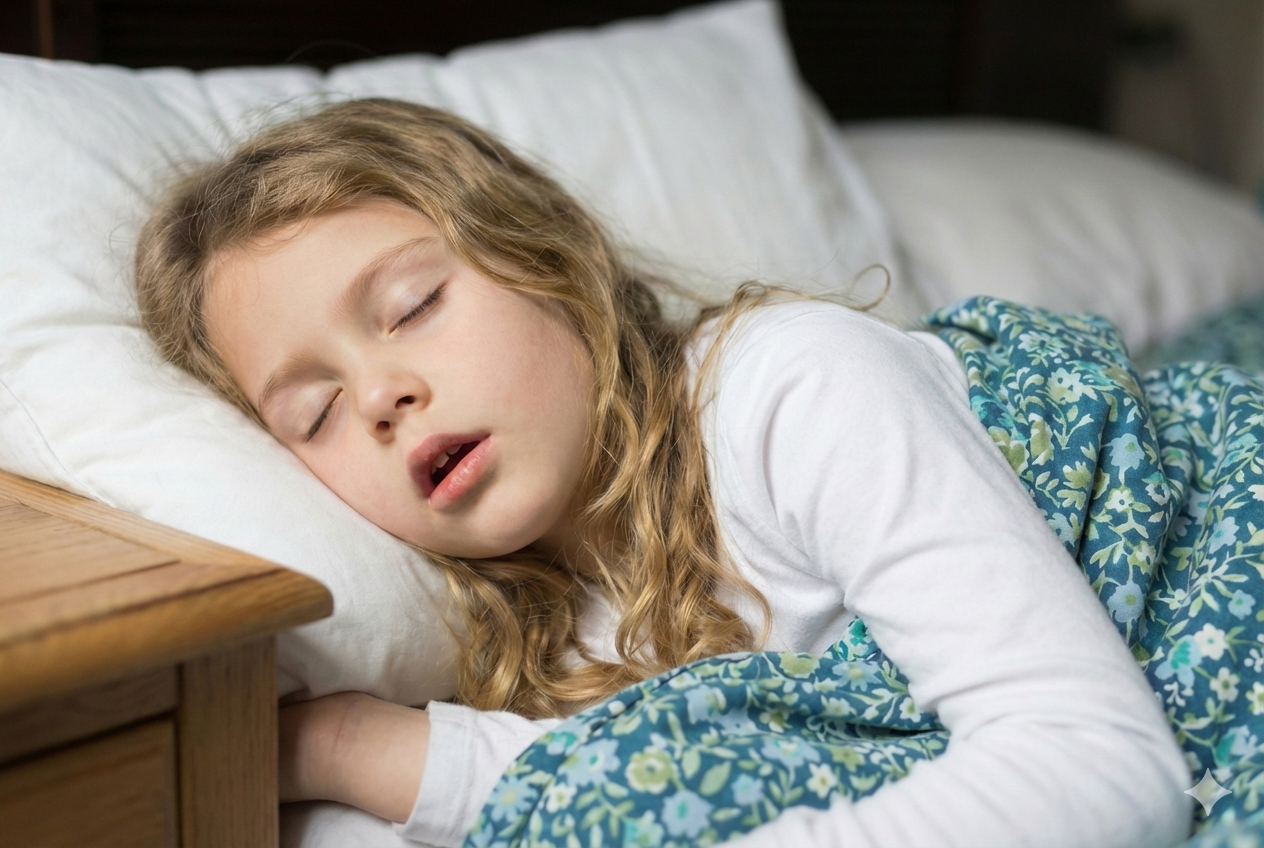
You know that moment.
Your child is yawning at dinner. Barely keeping their eyes open during homework. Slumped on the sofa by 7pm like a victorian fainting onto a chaise longue.
And then — the moment their head hits the pillow — suddenly wide awake. Thirsty. Worried about something that happened at lunch. Absolutely certain they heard a noise. Urgently needing to tell you about a dream they had three weeks ago.
If bedtime in your house rarely goes to plan, you're in good company. The gap between "clearly exhausted" and "actually asleep" can feel bafflingly wide.
And while there's no single fix (we really, really wish), what your child eats can be part of the wider picture¹².
Why sleep can feel hard for kids (and everyone else)
Today's children are busy.
Between school, activities, screens, friendships, and full days of thinking, feeling and holding it together until home time, it's not surprising that switching off doesn't always happen on cue.
Children aged 6–13 are generally thought to need around 9–11 hours of sleep a night¹ — a number that can feel almost fictional on a Wednesday in February.
Some common things that quietly get in the way:
- Screen time close to bedtime — which can make it harder for the brain to register that the day is actually overʲ. The blue light issue is real, but so is the "just one more episode" issue.
- Overbooked schedules — with little space to decompress between school, activities and homework. Sometimes all three land at once, with a permission slip that needed signing yesterday.
- Evening eating habits — what children eat later in the day can affect how settled sleep feels²ᵈ. More on this shortly.
- Stress or worries — which have a habit of showing up the moment the lights go out². Daytime is for ignoring things. Bedtime is for suddenly processing them all at once.
- Not enough movement — regular activity helps the body feel ready for rest¹. A child who's been sitting all day may be mentally exhausted but physically underwhelmed.
- Shifting bedtimes — where "just tonight" becomes three nights in a row, and suddenly 9pm is the new 8pm¹.
None of these are dramatic on their own. But together, they can nudge sleep quietly off course — often without anyone noticing until the morning after, when everything feels harder and everyone is worse.
What a rough night can look like the next day
Sleep does a lot of heavy lifting for growing children. It's when the brain consolidates learning, the body repairs, and emotions get filed away (or at least shuffled into a pile for later).
When it's patchy or short, you might notice changes in mood, focus, energy, or how quickly things tip into tears the next day¹²ᵉ. Learning can feel harder. Patience runs thinner. The volume on everything — emotions, reactions, sibling disputes — turns up.
For everyone. Not just them.
What's on the plate might matter more than you'd think
Here's something that doesn't always make it into bedtime conversations. What children eat can influence how easily they settle at night.
The gut and the brain are more closely linked than most of us realise. Nutrition plays a quiet role in how the nervous system functions, including the shift from "go mode" to "slow mode"².
This isn't about "sleep foods" or strict rules. It's about gentle, everyday support that works in the background — whether or not bedtime actually goes smoothly.
The usual suspects at bedtime
Some foods and drinks are more likely to interfere with sleep, particularly when they show up later in the day:
- Higher sugar intakes — linked with more unsettled sleep in children and teenagers²ᵈ. The post-dinner biscuit isn't the villain here, but a day of accumulated sugar can make the evening landing bumpier.
- Highly processed foods — often associated with less consistent sleep patterns²ᵈ. The body seems to rest better when it's not also working overtime on digestion.
- Caffeine — which can make it harder to feel sleepy, even hours after that hot chocolate²ᵍ.
Yes, chocolate contains caffeine. No, we're not suggesting you confiscate dessert. Just flagging. (The bedtime hot chocolate may be doing more than warming them up.)
How nutrition quietly supports sleep
Some nutrients are involved in how the nervous system relaxes and prepares for rest². They don't "knock kids out" — they simply help the body do what it's already trying to do.
Think of it less like a sleeping pill and more like removing obstacles from the runway.
Vitamin D
Vitamin D plays a role in nervous system function and normal sleep-wake rhythms²ᶠ.
In the UK, sunlight exposure can be limited for much of the year — which is why vitamin D tends to come up in conversations about children's nutrition, usually right around October when everyone suddenly remembers it exists.
Food sources Vitamin D: fatty fish, egg yolks, cheese, fortified foods
Magnesium
Magnesium helps regulate the nervous system — think of it as the body's dimmer switch, helping dial things down from full brightness to something softer².
It's involved in how muscles release tension and how the brain shifts gears at the end of the day. When magnesium is low, that shift can feel harder — like trying to settle with all the lights still on and someone playing the trumpet next door.
Food sources Magnesium: nuts, seeds, wholegrains, leafy greens, beans (yes, even the ones they carefully pick out and arrange around the edge of the plate)
Vitamin B6
Vitamin B6 is involved in how the body makes compounds linked to mood and sleep².
These processes help the body shift gears — from playground energy to pillow-ready calm. In theory, anyway. Results may vary depending on whether anyone mentioned the word "bedtime" too early.
Food sources B6: poultry, fish, chickpeas, bananas, potatoes with skins
And a few more worth knowing about
Sleep is never about one nutrient — it's always a bigger picture.
Other nutrients involved in nervous system and psychological function include folate, thiamine, pantothenic acid, biotin and iodine². A varied diet supports these over time.
Some foods with a bit of sleep science behind them
Some foods contain naturally occurring compounds associated with sleep regulation:
- Tart cherries — some studies link them with longer or more settled sleepᵃ
- Kiwi fruit — associated with falling asleep more easily in some researchᵇ
- Walnuts, oats and bananas — contain small amounts of melatonin or support its productionᶜ
No pressure to add them all. This is context, not a shopping list.
(Though if your child voluntarily eats tart cherries, please do get in touch. We have questions.)
Screens, sleep, and real life
Screens are part of family life — especially in the evenings when everyone's tired and negotiations feel harder. "No screens before bed" is easy to say at 10am on a Sunday. Less easy to enforce at 6:47pm on a Thursday when you're also trying to cook dinner.
Evening screen use has been linked with more disrupted sleep in children¹ᵈ. Some families find it helps to experiment with:
- Screen-free wind-down time before bed
- Keeping devices out of bedrooms
- Consistent boundaries that feel realistic for your household
What works for one family might not work for another. And what works beautifully in June might fall apart entirely by September. That's normal. Adjust and carry on.
The boring stuff that actually helps
Pairing nutrition with predictable routines can help signal that the day is winding down:
- Balanced meals and snacks earlier in the day
- Regular meal and bedtime timing where possible
- Calm activities before bed (ideally not involving Lego on the landing or "quickly" finishing a craft project)
- A sleep environment that feels safe and familiar
It doesn't have to be elaborate. Boring often works best. Sleep likes boring. Excitement is for daytime.
One last thought
Helping your child sleep better rarely starts at bedtime.
It's shaped by food, routine, stress, movement, and environment — all working quietly in the background over time¹²ᵉ. No single fix. No magic ingredient. Just lots of small things that add up.
Small, consistent changes can make sleep feel easier. Not overnight. (Sorry.) But gradually.
And sometimes, knowing you've gently supported the basics is enough to help everyone rest a little easier — even if bedtime still ends with one last request for water, one urgent question about penguins, and a final renegotiation of tomorrow's breakfast.
Supporting references
ᵃ European Journal of Nutrition (2012). Effect of tart cherry juice on melatonin levels and enhanced sleep quality.
ᵇ Asia Pacific Journal of Clinical Nutrition (2011). Effects of kiwifruit consumption on sleep quality in adults with sleep problems.
ᶜ Nutrients (2017). Dietary sources and bioactivities of melatonin.
ᵈ Frontiers in Pediatrics (2023). Eating habits and sleep difficulties in children and adolescents.
ᵉ Harvard Medical School, Division of Sleep Medicine. Sleep, learning, and memory.
ᶠ International Journal of Molecular Sciences (2022). Vitamin D and sleep disorders in children.
ᵍ National Sleep Foundation (2023). Caffeine and sleep.
Authorised nutrition and health claims are listed separately in the page footer.
This is general information, not medical advice. If you have questions about your child's health, your GP or a registered healthcare professional is always the right place to start.